
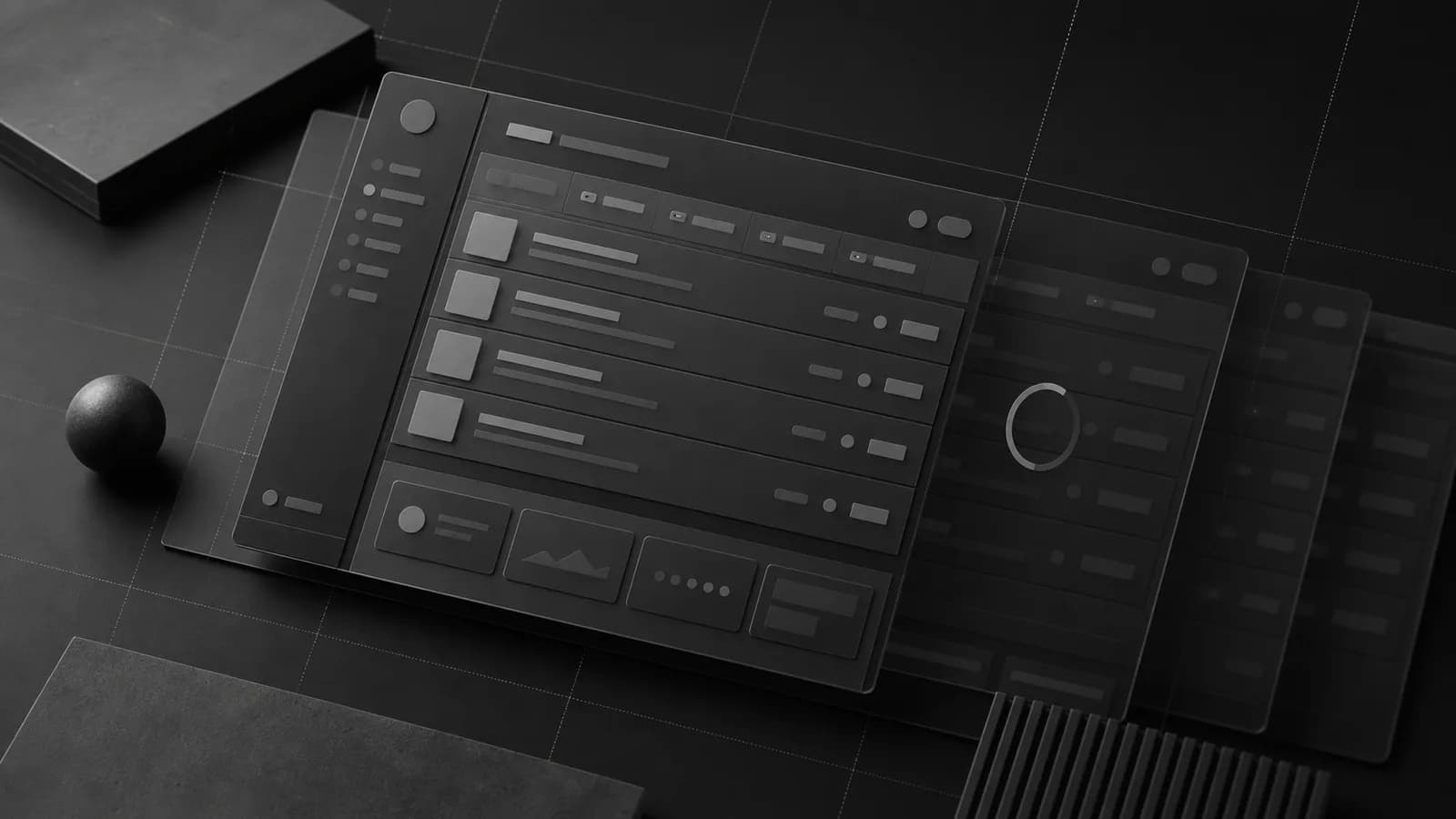
A good interface does not make people re-learn the room every time something changes.
The data can update. A panel can open. A filter can apply. A loading state can pass through the screen. But the shape of the product should remain familiar enough that the user still knows where they are.
That sounds like a small thing.
It is not.
A lot of product trust lives in spatial memory.
Movement has a cost
Interfaces move more than we think.
A button shifts because a badge appears. A table jumps because a row finished loading. A toolbar changes shape because one item is selected. A sidebar collapses differently depending on the page. A card grows because the copy was slightly longer than expected.
None of these moments feel like bugs in isolation.
They are usually easy to defend. The state changed, so the layout changed. The content is dynamic. The component is flexible. The design is responsive.
But the user does not experience that as architecture.
They experience it as the product refusing to stay still.
Stability is not stiffness
Keeping the interface's shape does not mean freezing the screen.
Good products change state clearly. They show progress, reveal detail, make room for new information, and adapt to different contexts.
The difference is whether the change feels anchored.
A stable interface lets the user predict where things will be after the state changes. The primary action does not wander. The navigation does not reinvent itself. The object they were looking at does not disappear under a loading shimmer. The screen can breathe without rearranging its logic.
That kind of stability is quiet.
You mostly notice it when it is missing.
The user is building a map
Every repeated product builds a map in the user's head.
Where the save button lives. Where errors appear. Where filters sit. Where the next item shows up. What part of the screen is permanent and what part is temporary.
This map is not decorative. It is how people move faster.
When the interface keeps changing shape, the user has to keep looking instead of acting. They check the screen again. They hesitate before clicking. They wait for the layout to settle before trusting it.
That delay is not dramatic.
But it is expensive because it happens inside attention.
Shape is a promise
A product's shape tells the user what can be trusted.
Persistent things should feel persistent. Temporary things should feel temporary. Important actions should not be displaced by incidental state. Loading should not make the screen feel like a different product.
This is why layout stability is not just a front-end detail.
It is product behavior.
A jumping interface says the product is still negotiating with itself. A steady one says the system understands what matters enough to hold it in place.
Not everything needs to be animated.
Not everything needs to resize.
Not every state deserves to rearrange the room.
The best interfaces leave the user with a simple feeling: I know where I am.
That feeling is easy to undervalue because it is not flashy.
But it is one of the clearest signs that the product respects the person using it.
A good interface keeps its shape so the user can keep their focus.